Rentals, specifically
How to find hidden cameras in an Airbnb
Forget "check the smoke detector." Everyone checks the smoke detector — which is exactly why a careful person doesn't put one there.
First, know the rules — they're stronger than most people think
Since April 30, 2024, Airbnb bans all indoor security cameras in listings — anywhere inside, for any purpose, disclosed or not, powered on or off. Outdoor cameras and doorbells are allowed but must be disclosed in the listing, must not point into interior spaces, and aren't allowed where privacy expectations are heightened (an outdoor shower, a sauna). Other platforms' rules are generally weaker — many still allow disclosed indoor cameras in common areas — so check the listing before you book. A camera placed illegally isn't just a platform violation — it's usually a crime where you're staying; see the actual statute for your state.
Where devices actually hide
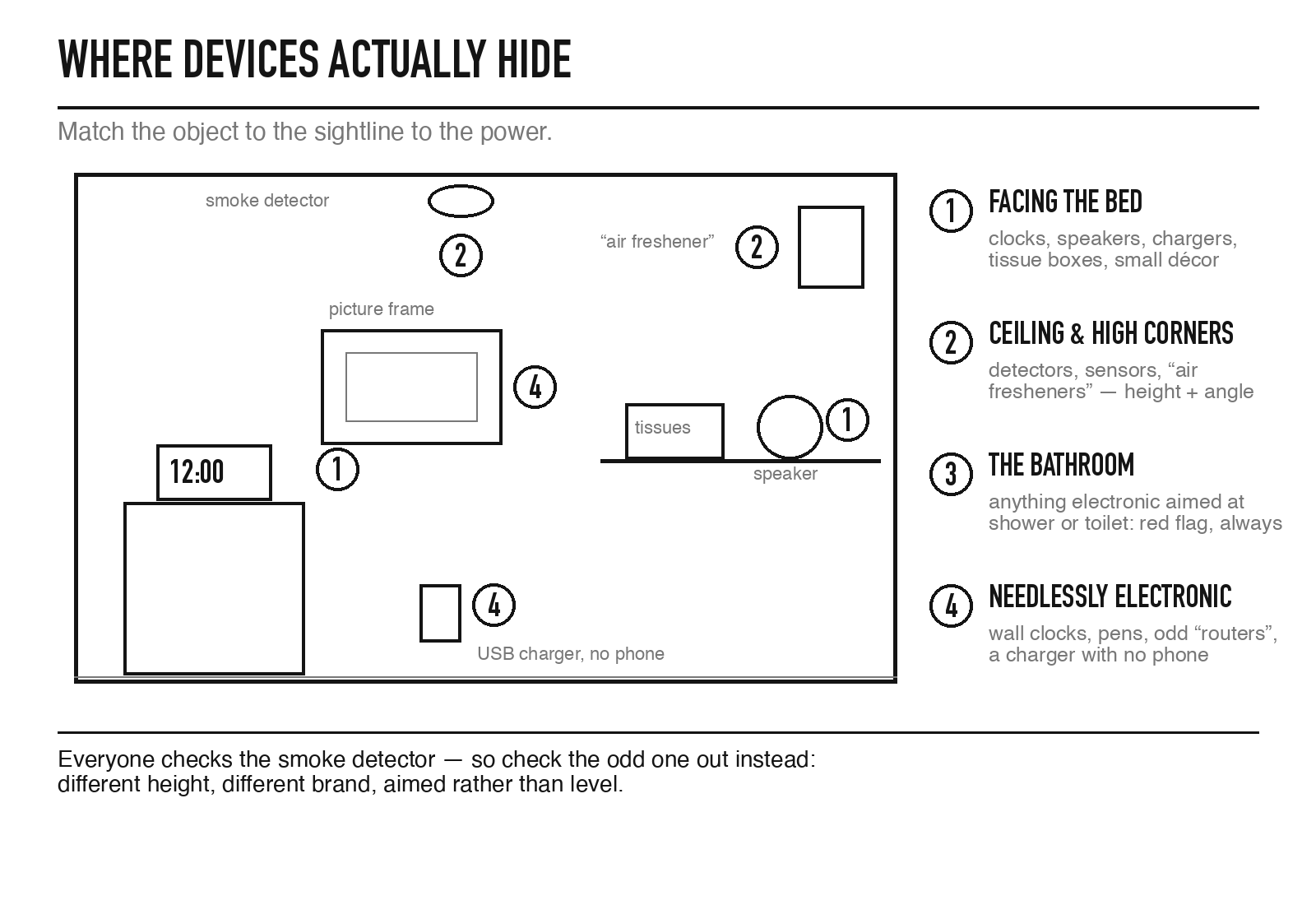
Hiding spots follow the sightline rule: they cluster wherever an object can sit with a clean view of the bed, the shower, or the changing area, at roughly the right height, near power. Ranked by how often they actually turn up:
- Anything on the nightstand or the wall facing the bed — alarm clocks (eye level, always plugged in, facing the bed), smart speakers, USB chargers and wall-adapter cameras, tissue boxes, picture frames.
- Ceiling and high-corner devices with a downward view — smoke and CO detectors, motion sensors, "air fresheners" mounted high. Height plus a wide angle is a camera's friend.
- The bathroom. Anything electronic aimed at the shower or toilet is a red flag by itself. Bathrooms should have no cameras, ever.
- Everyday objects that don't need to be electronic — wall clocks, pens in a cup, an oddly placed "router," a charging block plugged in with no phone.
Staring at one specific object and not sure? The object-by-object guide covers 25 of them individually — smoke detectors, alarm clocks, smart speakers, and more — with the one tell that actually matters for each.
Two habits that beat any list
Notice what doesn't belong to the room's story. Every rental has a style — furniture, art, fittings all came from the same decision. A bargain-bin digital clock in an otherwise designed bedroom, or a lone smoke detector newer and whiter than the other two, arrived for a different reason than everything else. Worth a look.
Check the odd one out. Three identical smoke detectors and one at a different height, facing a different way? That's the one. Devices installed by a builder are level, evenly spaced, and boring. Devices installed by a person with a purpose are aimed.
Want the full ten-minute, room-by-room walkthrough? The complete system — every check on this site plus the ten-minute walkthrough, audio devices, your legal rights, and what to do if you find something. 47 printable pages, instant download, keep it on any device.